What Is a Freestall Barn?
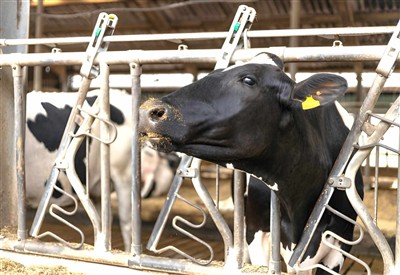
A freestall barn (also spelled "free stall barn") is a type of loose-housing dairy cattle facility in which cows are not tethered or tied in place. Instead, the barn contains a series of individual resting stalls - open on both ends - that cows can enter and exit freely throughout the day. This distinguishes freestall housing from older tie-stall or stanchion barns, where each animal is fixed to a single spot.
The term "freestall" refers to the stall itself: a defined, bedded lying space sized to fit one animal, bordered by dividers on each side and a brisket board at the front. Cows are free to use any available stall at any time.
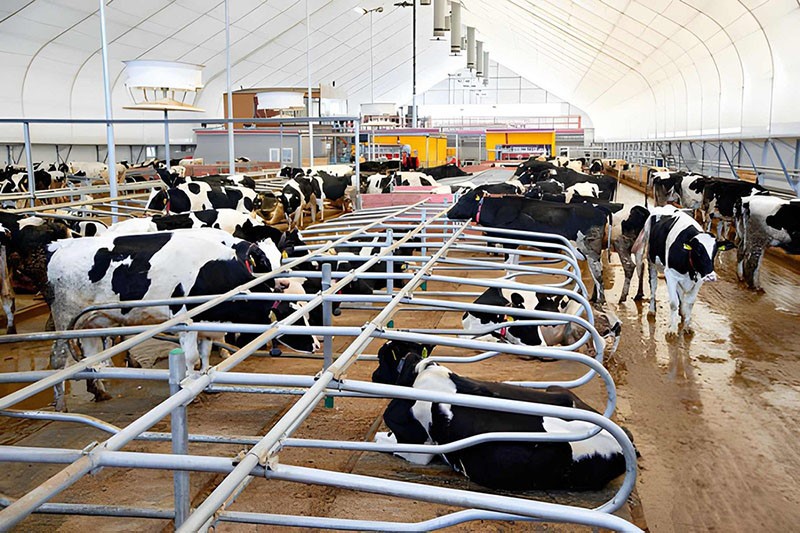
The layout typically groups stalls into rows along the length of the barn, with feed alleys running parallel to the feeding fence on one or both sides, and manure alleys separating each row of stalls. Cows move naturally between lying, eating at the feed bunk, and drinking at waterers positioned throughout the facility.
A Brief History of Freestall Housing
The freestall concept emerged in the United States during the 1950s and 1960s as dairy herds grew too large for traditional stanchion barns to manage economically. Iowa State University and other land-grant institutions published early research demonstrating that cows in loose housing maintained comparable or better milk production compared to tied systems, with significantly lower labor requirements per animal.
By the 1980s and 1990s, freestall barns had become the dominant housing format for large-scale dairy operations in North America and Northern Europe. Today, they are the global standard for herds of more than a few hundred cows, with design refinements continuing to evolve around ventilation, stall geometry, and flooring technology.
Key Components of a Freestall Barn
Understanding what a freestall barn includes helps clarify what makes it effective. The major elements are:
1. Individual Resting Stalls
Each stall is sized to match the breed of cow housed. For Holstein dairy cows (the most common North American dairy breed), a standard stall measures approximately 4 feet wide and 8 feet long for a forward-lunge design. The stall loop dividers prevent cows from lying sideways and define personal space without restricting normal rising and lying motions.
A brisket board at the front of the stall stops cows from lunging too far forward onto the concrete, keeping the bedded area clean and preventing cows from resting with their hindquarters in the alley.
2. Manure Alleys
Wide, smooth concrete alleys behind the stall rows serve as walking lanes and manure collection zones. They are typically scraped clean mechanically two to four times per day using automated alley scrapers or flush systems. Proper alley width (typically 8–12 feet) ensures cows can pass each other without conflict.
3. Feed Bunk and Feed Alley
A continuous concrete feed bunk runs along one or both sides of the barn, separated from the manure alley by a headlock or post-and-rail barrier. The feed alley on the other side allows a total mixed ration (TMR) wagon or robotic feeding system to deposit fresh feed throughout the day without entering the cow area.
4. Waterers
Adequate, clean water is critical for milk production. Modern freestall barns position waterers at the ends of stall rows and near pen crossovers, targeting a minimum of 3–4 linear inches of water space per cow.
5. Ventilation System
Heat stress sharply reduces milk production and reproduction rates. Freestall barns may use natural ventilation (large open sidewalls with curtains), tunnel ventilation, or cross-ventilation systems with supplemental fans positioned above the stalls and feed bunk. In warmer climates, evaporative cooling via soakers at the feed line is common.
12–14
HOURS/DAY COWS SPEND
LYING DOWN
1.7 lbs
EXTRA MILK PER EXTRA
HOUR OF LYING TIME
80%
OF LARGE DAIRIES USE FREESTALL HOUSING
Freestall Bedding Options: Pros and Cons
Bedding is one of the most consequential decisions in freestall barn design because it directly affects cow comfort, lying time, lameness rates, and somatic cell count (SCC) - the key measure of milk quality. The main options are:
| Bedding Type | Cow Comfort | Mastitis Risk | Maintenance | Cost |
|---|---|---|---|---|
| Deep Sand | ★★★★★ | Lowest | High (manure sep. needed) | Medium–High |
| Recycled Manure Solids (RMS) | ★★★★ | Moderate (if dried) | Medium | Low |
| Waterbeds | ★★★★ | Low–Moderate | Low | High upfront |
| Rubber Mattress + Top Dressing | ★★★ | Low–Moderate | Low–Medium | Medium |
| Straw or Sawdust | ★★★ | High if wet | High | Variable |
Sand remains the industry benchmark for cow comfort and udder health because its inorganic nature inhibits bacterial growth. However, sand-laden manure requires a sand-manure separator and settling lanes before entering any lagoon system, which adds capital and operating cost.
Recycled manure solids have become increasingly popular as a zero-cost bedding source on larger dairies with anaerobic digesters or mechanical separators. When properly dried to below 30% moisture, RMS performs comparably to sand for comfort and mastitis control.
"Every additional hour a dairy cow spends lying down translates directly to increased blood flow through the udder and measurable gains in daily milk yield. Stall comfort is not a welfare luxury - it is a production input."
CORNELL UNIVERSITY PRO-DAIRY EXTENSION PROGRAM
Common Freestall Barn Configurations
Freestall barns come in several structural configurations, each suited to different herd sizes, climates, and land availability:
2-Row vs. 4-Row vs. 6-Row Barns
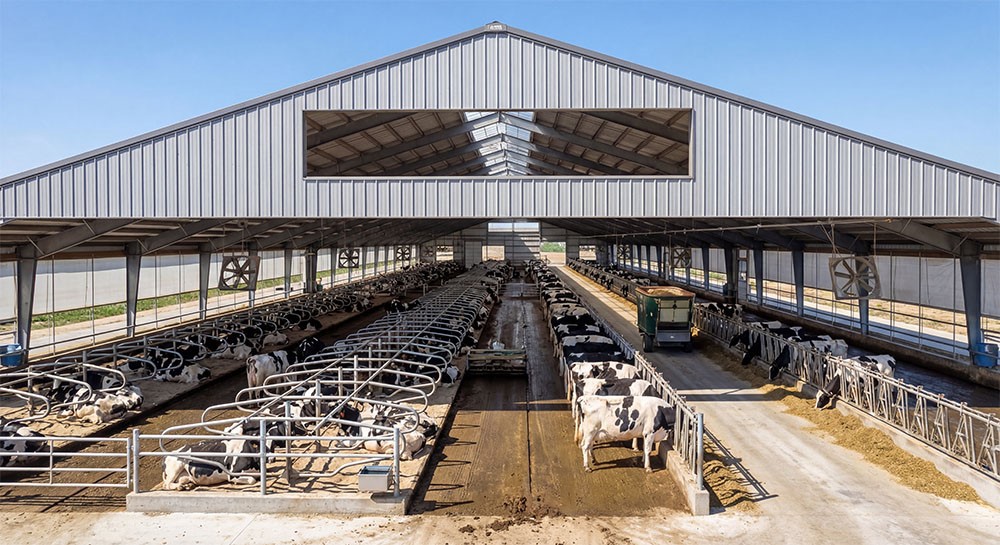
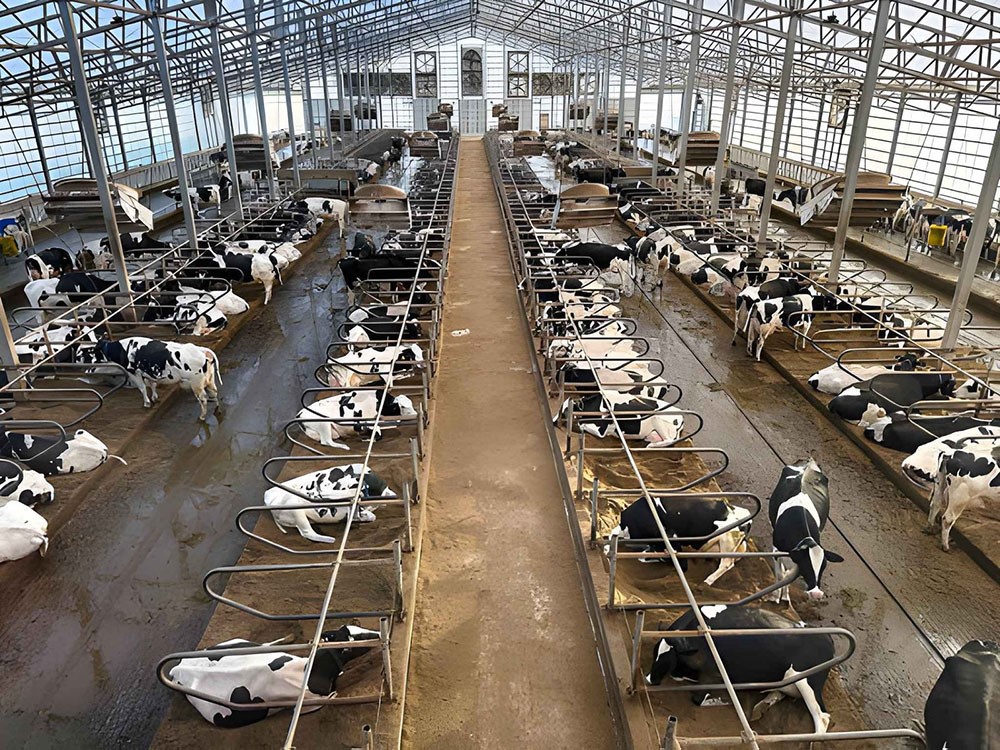
Smaller herds (under 200 cows) often use a 2-row barn with one feed alley and one manure alley. Larger operations favor 4-row or 6-row layouts that pair stalls head-to-head with a shared feed alley on each side. This reduces the building footprint per cow and minimizes the distance between the resting area and the feed bunk.
Monoslope vs. Gable Roof
A monoslope (lean-to) roof pitches in one direction, which simplifies construction and supports natural ventilation by creating a large, open eave on the downwind side. Gable roofs with open ridges are more common on older facilities and work well with natural cross-ventilation in mild climates.
Compost-Bedded Pack Barns
Though technically a variation, compost-bedded pack (CBP) barns share many principles with freestall housing. Instead of individual stalls, cows rest on a large open bedded area of wood shavings or sawdust that is aerated twice daily. CBP barns offer excellent comfort metrics but require high volumes of dry, affordable bedding material to maintain aerobic conditions.
Freestall Barns and Cow Comfort
The central argument for freestall housing is cow welfare. Research from the University of British Columbia and other institutions consistently shows that dairy cows are strongly motivated to lie down for extended periods - up to 14 hours per day under ideal conditions. When standing time increases due to poor stall design, lameness, or competition for stalls, milk production, reproductive efficiency, and immune function all decline.
Key cow comfort metrics tracked in a well-managed freestall barn include:
Stall Use Rate (SUR): The percentage of cows observed lying at any given time. A healthy target is 85% or higher during rest periods.
Lying Time: Measured via leg-mounted accelerometers (e.g., IceQube, CowManager), with a target of 11–14 hours per day.
Lameness Prevalence: Freestall barns with good stall design and flooring typically achieve lameness rates below 10–15%.
Stall Cleanliness Score: Scored 1–4; stalls should score 1–2 (less than 50% of the lying surface soiled) for mastitis prevention.
Freestall vs. Tie-Stall Barns: Key Differences
| Feature | Freestall Barn | Tie-Stall Barn |
|---|---|---|
| Cow Movement | ✔ Unrestricted | ✗ Fixed position |
| Labor per Cow | ✔ Lower | ✗ Higher |
| Herd Size Scalability | ✔ Excellent | ✗ Limited |
| Individual Cow Monitoring | Moderate (pen-based) | ✔ Easier (each animal fixed) |
| Capital Cost | Higher per building | Lower per building |
| Social Behavior Expression | ✔ Supported | ✗ Restricted |
Planning and Building a Freestall Barn: What to Consider
Before breaking ground, dairy producers should evaluate several planning factors:
Stocking Density: Industry guidance recommends no more than 100–110 cows per 100 stalls. Higher stocking density reduces lying time and increases social competition.
Pen Grouping Strategy: Fresh cows, high-producing cows, dry cows, and close-up heifers all have different nutritional and space needs. Planning pen layouts around transition cow management is critical.
Manure Handling: Sand bedding, slatted floors, or scraped alleys each require different downstream handling infrastructure - from manure pumps to sand separators to lagoon sizing.
Local Permitting: Most jurisdictions require nutrient management plans, setback distances from waterways, and building permits. Engage your local NRCS office or agricultural engineer early.
Future Expansion: Leave room in the site plan for a second barn or expanded pen configuration. Retrofit opportunities are expensive; planning for growth is not.
Frequently Asked Questions
What is the difference between a freestall barn and a free-range barn?
A freestall barn provides individual resting stalls within an enclosed facility. Free-range housing generally refers to systems that allow cows access to outdoor pasture for part of the day. Some operations combine both - freestall housing as the primary nighttime and inclement-weather shelter, with daytime pasture access.
How many cows can a freestall barn hold?
Freestall barns range widely in capacity, from small operations with 50–100 cows to large commercial facilities housing 2,000 or more. The standard guideline is one stall per cow, with slight overcrowding (up to 110%) sometimes used in practice - though research shows this increases competition and reduces lying time.
What bedding is best for freestall barns?
Sand is widely regarded as the gold standard for cow comfort and udder health, though it requires specialized manure handling. Recycled manure solids are the most cost-effective alternative when properly managed. Rubber mattresses with organic top dressing work well in colder climates where sand is hard to source.
Do cows in freestall barns produce more milk?
Yes, when properly designed and managed, freestall barns support higher milk production compared to tie-stall or drylot systems. The primary mechanism is increased lying time, which improves blood flow to the udder, reduces leg fatigue, and lowers stress hormone levels.
Sarah Whitmore, M.S.
Animal Scientist & Dairy Housing Consultant
Sarah spent eight years as an extension dairy specialist at a Midwest land-grant university before founding a barn design consulting practice. She has worked on housing projects in 14 U.S. states and three Canadian provinces.