Whether you run a small family farm or a large commercial operation, a cattle chute is one of the most important investments you can make in livestock management. This guide breaks down every major benefit, from animal welfare to your bottom line.
3x
FASTER PROCESSING VS.
OPEN-PEN METHODS
70%
REDUCTION IN HANDLER INJURY RISK
#1
RECOMMENDED PIECE OF HANDLING EQUIPMENT
What is a cattle chute?
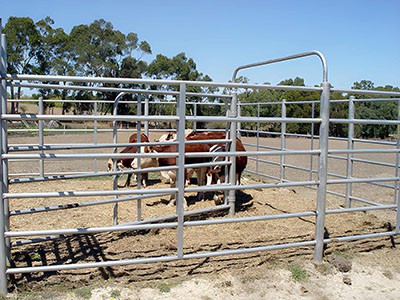
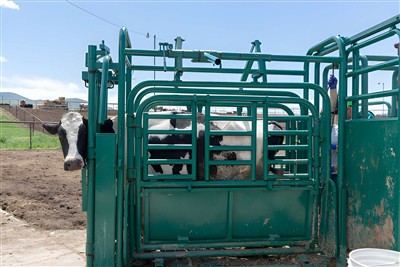
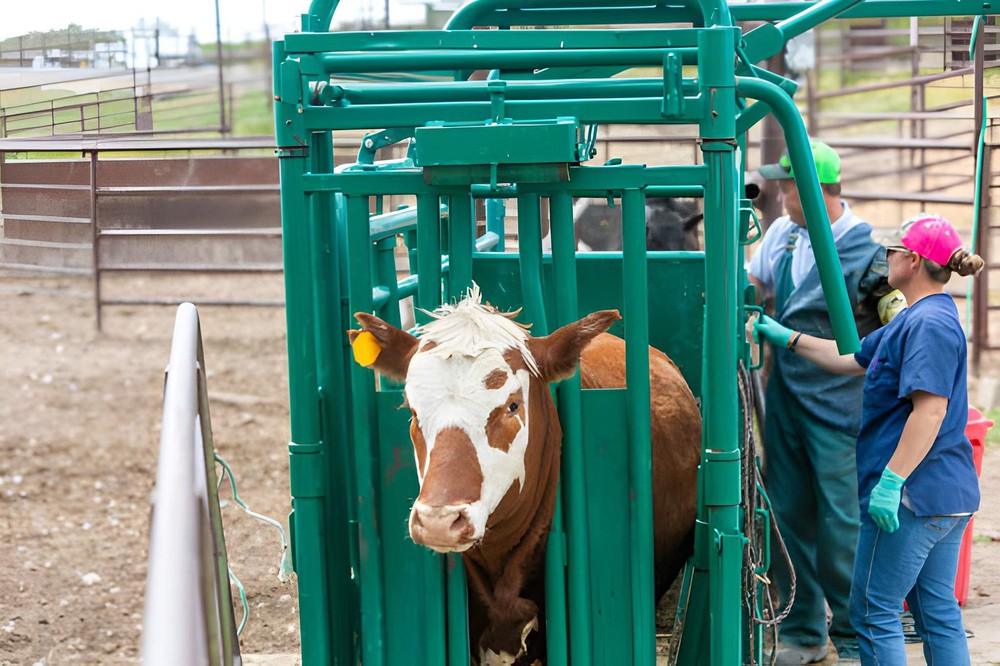
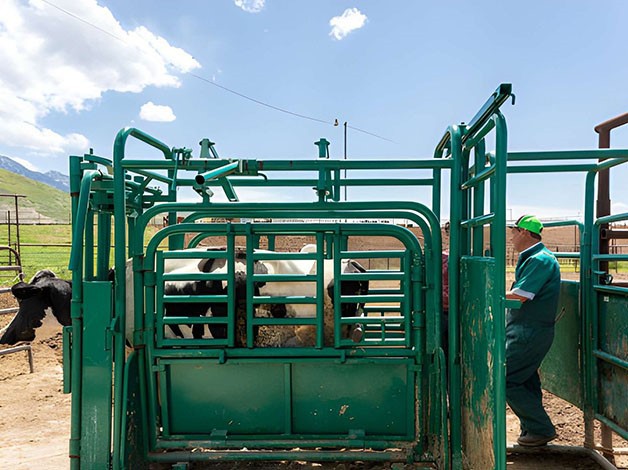
A cattle chute is a narrow, enclosed passageway designed to guide and restrain individual animals safely while handlers perform veterinary procedures, health checks, or routine management tasks. The most common type is the squeeze chute, which features adjustable panels that hold the animal securely with minimal stress. Headgate chutes, tub systems, and alleyway designs are also widely used on ranches of every size.
Used correctly, a cattle chute transforms what can be a chaotic, dangerous process into a calm, controlled, and efficient workflow. Below are the ten most significant benefits every rancher should know about.
The top 10 benefits of using a cattle chute
Improved animal safety
Cattle are large, powerful, and unpredictable under stress. A properly designed chute limits excessive movement, preventing animals from falling, twisting, or injuring their legs during procedures. This significantly reduces bruising, fractures, and soft-tissue injuries that can cost ranchers thousands of dollars in veterinary bills and lost weight gain.
Enhanced handler and worker safety
Cattle-related injuries are among the most common in agricultural work. A chute places a solid barrier between workers and an animal's hooves, horns, and body weight. Handlers can administer injections, apply ear tags, and perform pregnancy checks with far less risk of being kicked, crushed, or knocked over.
Reduced animal stress
Stressed cattle release cortisol, which suppresses immune function, reduces feed conversion efficiency, and leads to dark-cutting beef in slaughter animals. A well-built chute, combined with low-stress handling techniques, keeps animals calmer than open-pen wrestling or roping alternatives, which directly protects meat quality and herd health.
Greater veterinary access
Veterinarians need a stable, restrained animal to perform accurate diagnostics, rectal pregnancy checks, artificial insemination (AI), blood draws, and hoof trimming. A chute with a rear access gate, belly band support, and a head gate that holds the animal firmly gives vets the access they need to work safely and precisely.
Faster and more efficient processing
One operator working a squeeze chute can process cattle significantly faster than a team of handlers working in an open pen. With a well-designed alleyway feeding into the chute, a single rancher can vaccinate, tag, and record data on dozens of animals per hour, dramatically reducing labor costs during busy branding, weaning, or shipping days.
"The right chute setup is the single biggest upgrade a cow-calf operation can make for both animal welfare and labor efficiency."
BEEF CATTLE EXTENSION SPECIALIST, USDA COOPERATIVE EXTENSION
More accurate medication dosing
When an animal is restrained in a chute, it is far easier to weigh them using a load-bar or platform scale and administer precise, weight-based doses of dewormers, vaccines, and antibiotics. Improper dosing is a leading cause of treatment failure and contributes to antibiotic resistance in herds.
Easier record keeping and traceability
Modern squeeze chutes often include integrated digital scales, RFID tag readers, and data management ports. Capturing individual animal weights, health events, and ID numbers at the time of processing improves traceability, simplifies compliance with herd health programs, and gives ranchers the data they need to make better breeding and culling decisions.
Better hoof care and structural health
Hoof problems such as footrot, overgrown hooves, and hairy heel warts are a major source of lameness and production loss in beef and dairy herds. A tipping or rotating chute allows handlers to safely tip an animal on its side for thorough hoof examination and trimming without additional labor or the dangers of casting an animal on the ground.
Long-term cost savings
The upfront cost of a quality cattle chute is offset quickly by reduced veterinary call-out fees, lower labor hours per head processed, fewer injured animals, and better treatment outcomes. Many ranchers report full return on investment within one to three production seasons, making a chute one of the highest-value equipment purchases in livestock management.
Compliance with animal welfare standards
Industry certification programs, packer agreements, and retailer audit requirements increasingly demand documented low-stress handling practices. Using a certified squeeze chute with properly designed facilities helps operations meet Beef Quality Assurance (BQA) guidelines and other third-party audit standards, opening access to premium markets and higher prices per head.
FAQ
What is a cattle chute used for?
A cattle chute is used to safely restrain individual cattle for veterinary procedures, vaccinations, pregnancy checks, hoof trimming, tagging, weighing, and other health management tasks. It allows one or two operators to handle animals that would otherwise require a much larger crew.
What is the difference between a squeeze chute and a regular cattle chute?
A squeeze chute has adjustable side panels that gently compress against the animal's body to limit lateral movement. A standard chute restrains mainly the head and neck through a headgate mechanism. Squeeze chutes offer more complete body restraint and are generally preferred for procedures that require greater animal immobility.
How does a cattle chute improve animal welfare?
By reducing the need to physically rope or wrestle cattle, a chute lowers both physical injury risk and psychological stress during handling. Calmer animals recover faster, maintain better feed conversion, and are less likely to experience immune suppression as a result of high cortisol levels.
How much does a cattle chute cost?
Entry-level manual squeeze chutes start around $1,500 to $3,000. Mid-range models with self-catch headgates, full-length squeeze, and basic scales typically run $4,000 to $8,000. Heavy-duty hydraulic chutes with integrated digital scales and RFID readers can cost $10,000 to $20,000 or more. The investment usually pays for itself within one to three production cycles.