Cattle gates are not a single product - they are a family of specialized barriers, each engineered for a specific task in the livestock system. Choosing the wrong type for a given application leads to escaped animals, handler injuries, and infrastructure that needs rebuilding within a few seasons. This guide covers every major gate type, what it is built for, and what to look for when buying.
Pasture Swing Gate
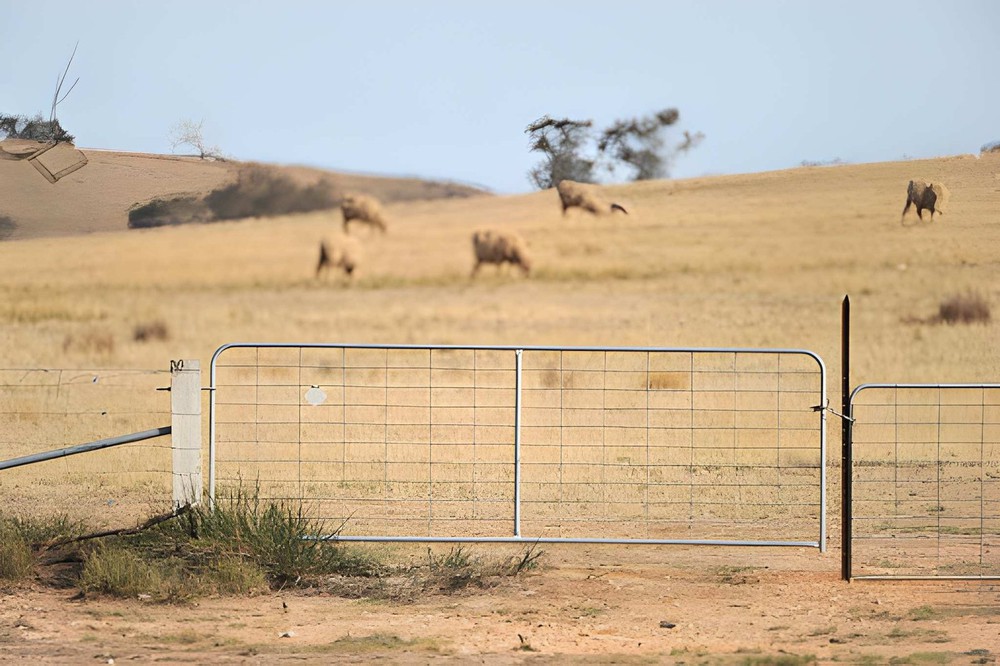
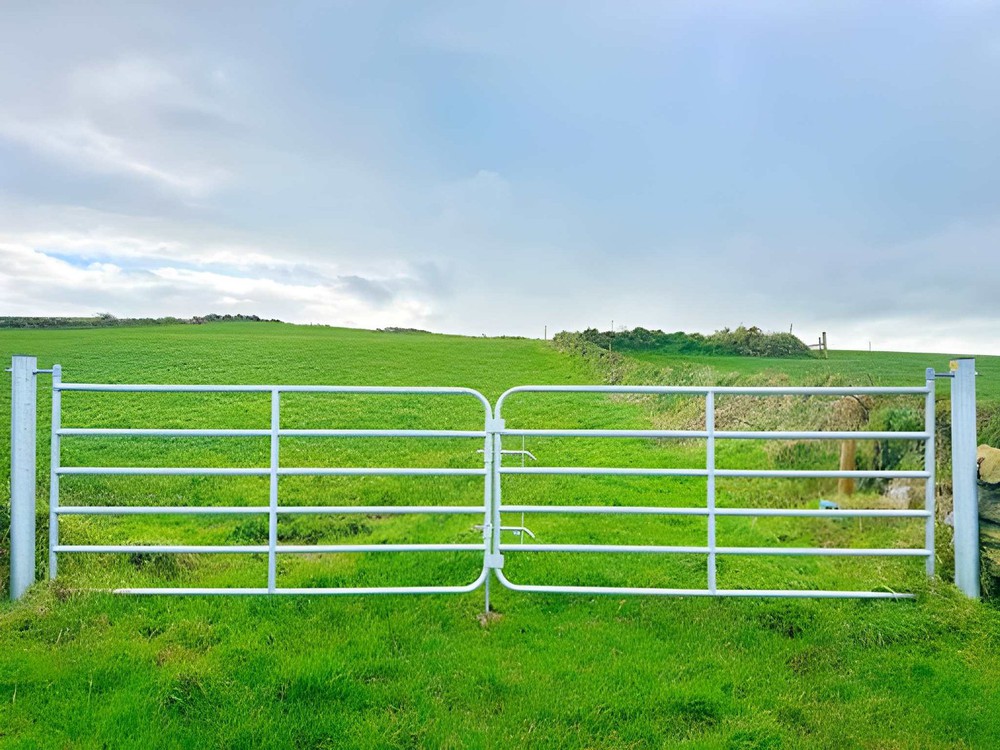
The pasture swing gate is the most common cattle gate on any farm. It hangs on a vertical hinge post and swings horizontally on two or more hinges, secured at the latch end by a chain, snap, or pin latch. Standard sizes range from 4 to 20 feet wide and 48 to 72 inches tall, typically built from 1.5" to 2" OD galvanized steel tubing with 4 to 7 horizontal rails.
Duty ratings vary widely within this category. A light farm gate built with 1.5" 14-gauge tubing is appropriate for low-stress pasture entries with calm adult cows. A heavy-duty gate built with 2" Schedule 40 pipe and a welded diagonal brace is needed for high-traffic corral entries, bull pastures, or anywhere cattle will regularly test the gate.
TYPICAL WIDTH
4 – 20 ft
TYPICAL HEIGHT
48 – 60 in
DUTY RANGE
Light → Heavy
PROS
Opens flat - eliminates dangerous corners
Integrates with portable corral panels
Can be flipped to open from either side
Progressive rails protect calves
CONS
More expensive than a basic swing gate
Requires a compatible panel connection system
Less suitable as a standalone pasture entry gate
Buying tip: Gate weight is a better predictor of long-term durability than tube diameter alone. A 12-foot heavy-duty gate weighing 100+ lbs built with proper diagonal bracing will outperform a lighter gate of the same nominal diameter that relies solely on the frame for rigidity.
Corral Bow Gate
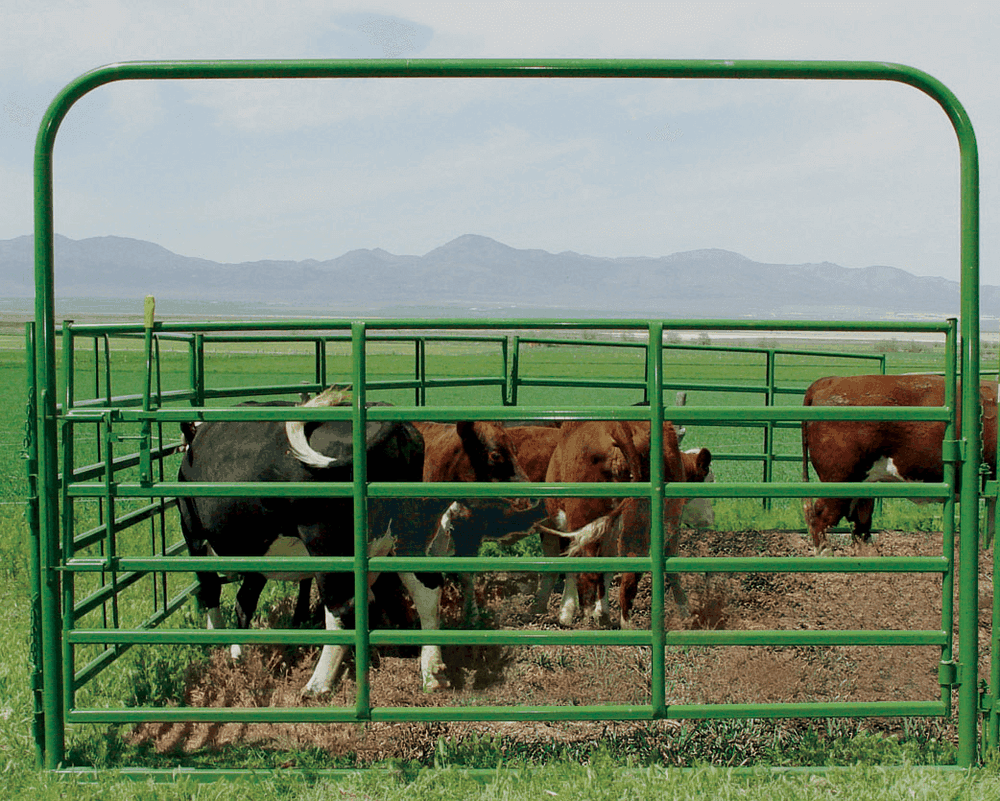
A bow gate is characterized by its curved or arched top frame - the "bow" - and its ability to swing nearly 360 degrees on its hinge. This near-full rotation allows the gate to open completely flat against an adjacent corral panel, eliminating the dead zone behind the gate where cattle can become trapped or cornered. Trapped cattle in a corner is a primary cause of handler injuries and animal injury, making bow gate design a meaningful safety feature.
Bow gates are the standard gate type for corral systems, crowding pens, and working alleys. They are designed to integrate seamlessly with portable corral panels, connecting via pin or hook mechanisms. Most bow gates are built from 1.6" to 1.9" OD tubing with 6 horizontal rails, and feature progressive rail spacing - rails spaced more closely at the bottom to prevent calves from pushing their heads through.
TYPICAL WIDTH
4 – 12 ft
TYPICAL HEIGHT
60 – 72 in
SWING ARC
~330 – 360°
PROS
Opens flat - eliminates dangerous corners
Integrates with portable corral panels
Can be flipped to open from either side
Progressive rails protect calves
CONS
More expensive than a basic swing gate
Requires a compatible panel connection system
Less suitable as a standalone pasture entry gate
Hinge quality matters enormously in bow gates. Metal-on-metal hinges corrode in sandy and manure-heavy environments, causing gates to seize mid-operation during cattle processing. Look for nylon-bushed hinge designs that eliminate direct metal contact, or budget for regular hinge maintenance on standard designs.
Panel Gate
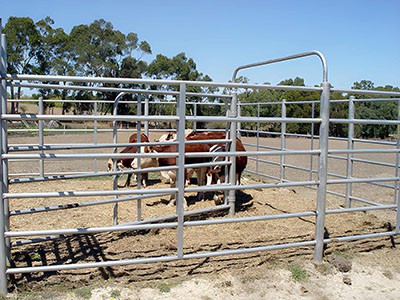
Panel gates are self-supporting, portable gate units that connect to adjacent corral panels via pin or hook connections without requiring a permanent hinge post. A standard cattle panel gate is typically 10 feet wide, 5 to 6 feet tall, built from 1.5" to 1.9" tubing, and designed to be repositioned repeatedly as pen configurations change.
Their key advantage over fixed swing gates is flexibility. A set of corral panels with panel gates can be assembled into a temporary pen in one location, then completely disassembled and relocated across the farm for the next use. This makes them particularly valuable for rotational grazing systems where temporary paddock subdivisions are needed, seasonal calving or weaning pens, or veterinary isolation areas set up on an as-needed basis.
DUTY CATEGORIES
Regular duty: 1.25"–1.3" frame tubing, 5–6' tall, 10' wide. Appropriate for lower-pressure applications - paddock dividers, small calf pens, sheep and goat enclosures.
Heavy duty: 1.6" frame tubing, 1" rails, 5.5'–6' tall. Designed for cattle under moderate pressure - sorting pens, temporary weaning pens.
Extra heavy duty: 1.9"–2" frame tubing, Schedule 40 or high-tensile steel. For high-pressure working systems, bull pens, and permanent corral configurations that happen to use portable panels.
TYPICAL WIDTH
10 – 16 ft
TYPICAL HEIGHT
5 – 6 ft
CONNECTION
Pin / Hook / Sleeve
PROS
Fully portable and reconfigurable
No permanent post required
Connects with other panels quickly
Wide range of duty ratings
CONS
Can shift under heavy animal pressure if not staked
Connection pins can be lost in mud or grass
Not suitable as a primary pasture entry gate
Crowding Gate
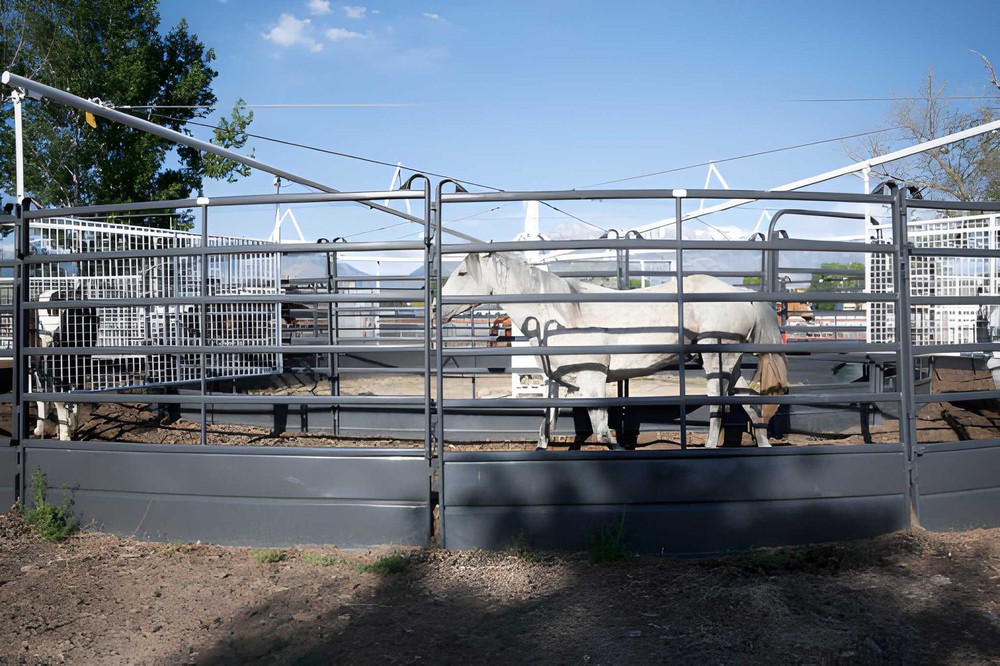
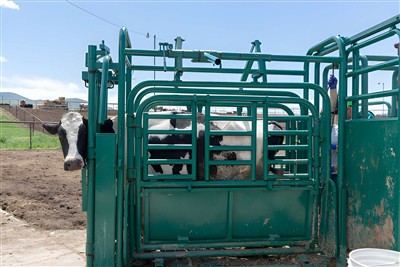
A crowding gate is a large, typically solid-sided or semi-solid gate that pivots on a central or offset hinge point to reduce the available space in a crowding pen, forcing cattle toward the working chute. As the gate is pushed forward, it progressively reduces the pen area until the animals have no choice but to move into the alley.
A standard quarter-circle crowding pen uses a 12-foot crowding gate and can handle up to eight mature cows at once. The effectiveness of the crowding gate depends heavily on solid sides - cattle that can see people or equipment outside the pen will balk and crowd against the fence rather than moving toward the chute. A well-designed crowding gate with solid lower sides removes visual distractions and works with cattle's natural behavior: move away from pressure, toward open space.
The crowding gate should be manageable by a single operator. Designs with a counterbalance mechanism allow the gate to be pushed with one hand, freeing the other for safety. Gates with a kickback feature - a mechanism that prevents cattle from pushing the gate back toward the handler - are a worthwhile investment on any operation larger than a few dozen head.
TYPICAL LENGTH
12 ft
CAPACITY (QUARTER-CIRCLE)
Up to 8 cows
SIDES
Solid or semi-solid
Handler safety: The crowding gate zone is one of the highest-risk areas on a cattle operation. Always use a crowding gate with a personnel escape route or handler step - a step welded to the gate frame or a walk-through man gate in the adjacent panel - so the handler is never trapped between cattle and the gate.