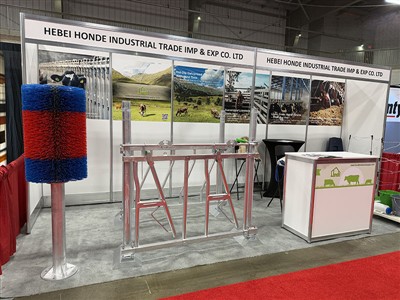
The basic idea is simple: each cow free stall provides a defined space where one cow can lie down and rest, while the surrounding alleys allow the herd to move naturally. The stalls are normally separated by metal stall dividers, and each resting space is fitted with bedding such as sand, mattresses, rubber-filled surfaces, compost, or other suitable materials. DairyNZ describes free stalls as bedding areas in which dairy cows can lie down and rest, while the broader free-stall barn provides housing, feed, water, and daily herd management facilities.
For modern dairy farms, a well-designed free stall system is more than a collection of metal partitions. Stall dimensions, bedding, flooring, ventilation, alley width, drainage, manure management, and cow movement all have to work together.
This new explains what a cow free stall is, how a free-stall barn works, what dimensions should be considered, which bedding materials are commonly used, and how farmers can choose a suitable dairy free-stall system.
How Does a Cow Free Stall Work?
A cow free stall is designed to give each cow a designated resting space without physically confining the animal to that space.
Inside a typical free-stall barn, cows can move between the individual stalls and shared alleys. They can leave a stall to walk to the feed bunk, drink water, interact with other cows, or move toward the milking area. When they want to rest, they return to an available stall.
The stall itself normally includes a resting surface and structural components that help position the cow correctly. Depending on the design, these may include:
●Free stall dividers
●Neck rails
●Brisket locators or boards
●Rear curbs
●Bedding surfaces
●Supporting posts and mounting hardware
The purpose of these components is not to restrain the cow. Instead, they help maintain stall separation, protect the resting area, and encourage cows to use the space correctly.
A properly planned cow free stall should allow the animal to lie down, rise, change position, and rest without excessive contact with the stall structure. The design also needs to make it practical for farm workers to keep the stall clean and dry. Ontario's dairy housing guidance emphasizes that stall dimensions must support normal standing, lying, rising, and resting movements while also considering cleanliness and ease of maintenance.
Why Do Dairy Farms Use Free Stall Barns?
One of the main reasons farmers choose a free stall barn is to combine individual resting spaces with freedom of movement.
In a conventional free-stall layout, cows have access to resting stalls as well as shared feeding and walking areas. This allows farmers to manage larger herds while providing designated resting spaces.
A well-designed dairy free stall system can offer several operational advantages:
Better Use of Barn Space
Individual stalls create an organized resting area and make it easier to arrange cows, feed lanes, waterers, and manure alleys within the same building.
Improved Herd Movement
Cows are not tied to one location. They can move between resting areas and feeding or watering points according to their normal daily routines.
Easier Barn Management
Because each cow free stall has a defined location, farmers can inspect bedding conditions, identify dirty or damaged stalls, and maintain the barn more systematically.
Flexible Housing Layouts
Free-stall barns can be designed with different stall-row arrangements, including head-to-head and tail-to-tail configurations. Ontario's dairy housing guidance notes that the complete barn layout should integrate stalls, alleys, feed areas, and other components into a functional and cost-effective plan.
What Are the Main Components of a Cow Free Stall?
A modern free stall system usually consists of several interconnected components. Each component affects cow comfort and the performance of the overall housing system.
Free Stall Dividers
Free stall dividers separate neighboring resting spaces and help prevent cows from occupying the same stall.
They are often manufactured from galvanized steel or other durable materials. The shape of the divider should provide enough space for the cow to lie down and rise naturally without hitting or rubbing against the structure.
Neck Rails
A neck rail helps control the cow's standing position and protects the rear portion of the stall from excessive manure contamination.
Its height and horizontal position are important because an incorrectly positioned neck rail can interfere with natural cow movement. Ontario's recommendations specifically consider neck-rail position when designing stalls for mature dairy cattle.
Brisket Locators
A brisket board, tube, or similar locator helps keep a cow correctly positioned within the stall.
The goal is to prevent the cow from moving too far forward while still leaving enough space for normal resting and rising movements.
Bedding Surface
The resting surface is one of the most important parts of a cow free stall. Common bedding options include sand, mattresses, rubber surfaces, compost-based materials, and other bedding systems.
Recent research has highlighted the importance of bedding management for cow health and welfare, with sand generally regarded as a strong option for supporting cow comfort and lying behavior when properly managed.
What Are the Recommended Free Stall Dimensions?
Free stall dimensions are one of the most frequently discussed topics when planning a free stall barn.
There is no single dimension that works for every dairy farm. Stall size should take into account cow body size, breed, age, weight, and the overall stall configuration.
For mature Holstein cows, published recommendations commonly consider stall width, stall length, neck-rail position, brisket location, and the amount of space available for forward lunge movement.
For example, Ontario guidance provides different stall widths for first-lactation cows, milking cows, and dry cows, while Penn State Extension provides size ranges based on cow body weight.
Penn State's guidance explains that a mature cow needs substantial forward space to rise naturally. For cows around 1,300–1,500 pounds, its suggested total stall length for an appropriate design is approximately 90–96 inches for open-front arrangements, with stall width also increasing with animal size.
The important point for a cow free stall is not simply choosing the largest possible stall. Excessive or poorly coordinated dimensions can affect positioning and cleanliness, while undersized stalls can restrict natural movement.
A good design should therefore consider the complete relationship among:
●Stall width
●Stall length
●Neck rail position
●Brisket locator position
●Rear curb
●Lunge space
●Cow body size
The Dairyland Initiative also emphasizes that stall dimensions should be evaluated together rather than treating each measurement as an isolated specification.
What Are the Benefits of a Well-Designed Free Stall System?
A professionally designed free stall system can support both animal welfare and farm management.
Cow Comfort
Correctly sized stalls provide cows with the room they need for natural resting and rising behavior.
Cleaner Cows
Proper stall positioning, bedding management, and manure handling can help reduce contamination of the resting area.
Better Use of Space
Rows of individual stalls allow farmers to organize resting, feeding, and movement areas efficiently.
Easier Maintenance
A standardized stall layout makes it easier for employees to inspect, clean, and repair the barn.
Flexible Herd Management
A free-stall barn can be divided into groups according to lactation stage, age, production level, or health-management needs.
However, these benefits depend strongly on design and management. DairyNZ notes that free-stall barns can improve herd comfort and feed-use efficiency while also requiring substantial initial investment and experienced management.
How Do You Choose the Right Cow Free Stall System?
Choosing a cow free stall system requires more than comparing the prices of metal loops or stall dividers.
First, determine the size and type of cattle that will use the stalls. First-lactation cows, mature milking cows, dry cows, and heifers can require different space allowances.
Second, decide which bedding system will be used. Sand, mattresses, and organic bedding each have different management requirements.
Third, consider the manure-management system. Bedding, flooring, alley design, and manure collection should be compatible with one another.
Finally, choose durable stall hardware that can withstand daily use, moisture, cleaning chemicals, and contact with cattle.
For international dairy equipment buyers, it is also important to evaluate the supplier's manufacturing experience, material quality, installation guidance, customization capability, and after-sales support.
A reliable free stall supplier should be able to provide a system that matches the dimensions and management conditions of the farm rather than simply selling standard components.
Conclusion: Why Does Cow Free Stall Design Matter?
A cow free stall is a defined resting space that gives dairy cows a place to lie down while allowing them to move freely through the barn.
Modern free stall barns are designed around the principle that cow comfort, hygiene, movement, and farm efficiency should work together. The performance of the system depends on many interconnected elements, including stall dimensions, bedding, flooring, neck rails, brisket locators, ventilation, alley layout, and manure management.
For dairy farmers, the key is not simply to purchase a large number of stalls. The goal is to create a complete free stall system that fits the size of the herd, the breed of cattle, the farm's bedding strategy, and its management practices.
A well-designed dairy free stall can provide cows with a comfortable resting environment while helping farmers maintain a cleaner, more organized, and efficient dairy facility.
As dairy farming becomes increasingly focused on animal welfare, labor efficiency, and long-term farm performance, properly designed cow free stall systems will continue to play an important role in modern dairy housing.