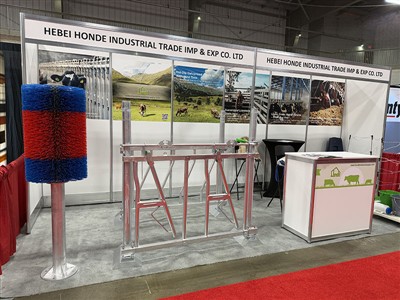
A cattle headlock is a practical feeding and cattle handling system that allows individual animals to be temporarily secured at the feed barrier. By combining feeding access with controlled restraint, it can help farmers improve animal observation, identification, routine management, and overall workflow around the feeding area.
As dairy and beef farms become more focused on efficient labor use and organized cattle management, feeding equipment needs to do more than simply separate animals from the feed bunk. A well-designed headlock can become an important part of the barn layout by giving farmers better control over individual cattle when necessary.
However, the value of a headlock depends on more than its locking mechanism. Its design, dimensions, installation, material, daily use, and maintenance all influence how effectively it performs in a real farm environment. Understanding these factors can help farmers choose a system that fits their cattle, feeding facilities, and management practices.
What Is a Cattle Headlock and How Does It Work?
A cattle headlock is a type of self-locking feed barrier installed along a feed bunk or feeding alley. Cattle can place their heads through designated openings to reach the feed. When necessary, the locking mechanism can be engaged to hold individual animals in position.

This creates a controlled point for cattle management without requiring animals to be moved to a separate handling area for every routine task. Depending on the farm's management procedures, workers may use the system when identifying individual animals, carrying out inspections, monitoring cattle, or performing suitable short-term management procedures.
The basic principle is relatively simple, but the structure needs to be designed around the natural movement and size of the cattle. The opening should provide enough room for an animal to enter and withdraw its head comfortably, while the locking mechanism should operate smoothly and release the animal efficiently.
For this reason, a cattle headlock should be considered part of the complete feeding system rather than an independent piece of equipment. Its position, height, length, and supporting structure all need to work with the feed bunk and barn layout.
Cattle headlocks are most effective when their placement fits the farm's feeding layout and daily handling routines. If you are planning or upgrading a cattle facility, our [Cattle Farm Equipment] guide provides a broader overview of feeding, watering, housing, and herd management equipment.
Why Do Dairy Farms Use Headlock Feed Barriers?
One of the main reasons farms choose headlock feed barriers is the combination of feeding and individual cattle management.
In a large herd, finding and controlling a particular animal can take considerable time. When cattle are already positioned at the feeding area, a headlock can provide a more predictable location for individual observation and selected management tasks.
This can make everyday work more organized. Instead of moving cattle unnecessarily around the barn, workers may be able to use the feeding period to identify animals and perform appropriate checks.
A headlock can also be useful when farmers need to observe differences between individual cattle. Feeding behavior, appearance, and general activity can be monitored more easily when animals are accessible at a fixed feeding location.
The system is not intended to replace proper cattle handling procedures. Rather, it provides an additional management point that can reduce unnecessary movement and help workers organize suitable tasks more efficiently.
For larger dairy operations, even small improvements in the movement of people and cattle can have a meaningful effect on daily labor requirements.
What Makes a Good Cattle Headlock Design?
A good cattle headlock needs to balance animal access, restraint, durability, and ease of operation.

The first consideration is the size and shape of the openings. The design should correspond to the cattle group using the equipment.
Mature dairy cows, heifers, and other cattle categories can differ significantly in body size, so the same configuration may not be suitable for every application.
The locking mechanism is another important part of the design. Workers should be able to engage and release the system without unnecessary difficulty. A simple operating process can make daily management more efficient, particularly when many animals are involved.
Structural strength is equally important. Feeding barriers are exposed to repeated contact from cattle, so the frame, joints, welded areas, and locking components need to withstand regular use. Material selection and surface treatment can also affect resistance to corrosion and long-term durability.
The relationship between the headlock and the feed bunk should also be considered. The height and position of the barrier should support normal feeding behavior rather than interfere with access to feed.
In other words, a quality headlock is not simply a strong metal frame with a locking mechanism. It is a system designed around the behavior of cattle and the practical workflow of the farm.
How Does a Headlock Improve Cattle Handling?
Efficient cattle handling begins with creating a predictable environment for both animals and workers.
A feeding area equipped with a headlock can provide a convenient location for individual identification and observation. When cattle naturally gather for feeding, workers can take advantage of this routine to carry out suitable management activities.
For example, if a particular animal needs to be identified or observed, controlling its position at the feed barrier may be easier than attempting to locate and catch it elsewhere in the barn.
This can reduce unnecessary cattle movement and simplify certain workflows. It can also make the feeding area more than just a place where animals receive feed; it becomes an organized management point within the barn.
Nevertheless, restraint should always be used appropriately. Animals should not be held longer than necessary, and workers should understand how to operate the locking and release mechanisms safely.
The purpose of the equipment is to make cattle management more organized and practical, not to replace good animal-handling practices.
How Should Cattle Headlocks Be Installed and Used?
Installation should be planned together with the feeding area rather than treated as a separate construction step.
The position of the headlock affects how cattle approach the feed bunk, how workers move around the area, and how easily the locking mechanism can be operated. There should be enough space for cattle to feed naturally while maintaining convenient access for farm workers.
The cattle group also needs to be considered before installation. A system designed for mature dairy cows may not have the same requirements as one intended for smaller cattle. The dimensions of the openings, feeding height, and overall structure should correspond to the animals and the existing feeding system.
The supporting structure must also be suitable for the expected load and operating conditions. A properly aligned and securely supported system can help reduce unnecessary movement, noise, and mechanical stress during daily use.
For a new barn, these factors can be incorporated into the original layout. For an existing facility, the available feed bunk, floor level, structural support, and worker access should be evaluated before selecting the installation method.
Once installed, workers should become familiar with normal operating procedures. The locking mechanism should be used only when necessary, and cattle should be released promptly when the management task is complete.
How Can Farmers Keep a Cattle Headlock Working Properly?
Regular maintenance helps preserve the performance of a cattle headlock over time.
Because the system is exposed to cattle, feed residue, moisture, dust, and manure, both structural and mechanical components should be checked periodically. Particular attention should be given to the locking mechanism, moving parts, connection points, fasteners, and welded areas.
Cleaning is also part of proper equipment management. Accumulated feed and dirt can interfere with moving components, while moisture and corrosive substances may gradually affect metal surfaces.
A practical maintenance routine should therefore combine cleaning with mechanical inspection. If a locking component becomes difficult to operate, a connection becomes loose, or visible damage appears on the frame, the problem should be addressed before it affects normal operation.
The exact inspection frequency depends on the design, material, environment, and intensity of use. Farms with frequent daily operation may need more regular checks than facilities with lighter use.
Proper maintenance is not only about extending equipment life. It also helps ensure that the locking and release functions remain predictable for workers and cattle.
What Should Farmers Consider Before Choosing a Cattle Headlock?
The right headlock depends on the farm rather than on a single universal specification.
Before purchasing, farmers should first consider the type and size of cattle that will use the system. The feeding area, existing feed bunk, barn structure, and available worker space are equally important.
The intended purpose should also be clear. Some farms may mainly want a practical feeding barrier with an additional restraint function, while others may place greater importance on individual cattle management.
Durability should be evaluated together with the farm environment. Equipment used in an outdoor or high-moisture environment may require different material and surface treatment considerations from equipment installed in a protected indoor facility.
Product information is especially important for international buyers. Clear dimensions, technical drawings, material specifications, real application photos, and installation guidance can help buyers determine whether a particular configuration is suitable for their project.
Price is naturally part of a purchasing decision, but it should not be the only consideration. The overall value of the equipment also depends on durability, operating convenience, maintenance requirements, and compatibility with the farm's existing infrastructure.
How Can You Choose a Reliable Cattle Headlock Manufacturer?
Once the farm has determined what type of system it needs, the quality and capability of the manufacturer become important considerations.

A reliable supplier should be able to provide more than a product photograph and a basic price. International buyers may need detailed information about materials, dimensions, structural design, surface treatment, production quality, packaging, and installation.
Real factory and application information can also be useful. Production photos, welding details, finished products, packaging, and actual farm applications can help buyers understand the manufacturer's manufacturing capability and experience.
Customization may be another consideration for farms with special barn layouts. Different projects can require different lengths, configurations, connection methods, or surface treatments. A manufacturer with suitable production and technical capabilities may therefore be better positioned to support customized requirements.
Communication is particularly important in international projects. Clear technical information before production can help reduce misunderstandings during manufacturing, shipping, and installation.
For this reason, selecting a cattle headlock manufacturer should be viewed as part of the overall equipment decision rather than simply a search for the lowest price.