How Long Should a Calf Stay in a Calf Hutch?
A calf may stay in a calf hutch during its early weeks of life, but the appropriate time to move it depends on the farm's housing system, local regulations, calf health, and management goals. On many dairy farms, individual hutches are used during the pre-weaning period, with calves moving to pair or group housing as they grow.
However, there is no single age that suits every calf or every farm. Some operations begin transitioning healthy calves to pair housing early, while others use individual housing for a longer period where permitted and appropriate. The decision should account for the calf's development and the conditions available in the next housing area.
A calf hutch provides a designated space for feeding, observation, and rest. As calves grow, farmers must also consider their need for movement, social interaction, and access to suitable feeding and watering facilities.
The goal is not simply to keep a calf in a hutch for a certain number of weeks. It is to provide suitable housing at each stage of development and make the transition to the next system as smoothly as possible.
At What Age Should a Calf Move Out of a Calf Hutch?
The appropriate transition age depends on the housing method and the requirements that apply to the farm.
Individual calf hutches are commonly used during early calf rearing because they allow farmers to observe individual animals and manage feeding routines separately. However, individual housing should not automatically continue until a particular age without considering welfare guidance, social contact, and local rules.
For example, the UK regulations generally prohibit keeping calves in individual pens beyond eight weeks of age, except in specified circumstances supported by veterinary advice. Guidance from the Agriculture and Horticulture Development Board (AHDB) also recommends group housing from three weeks of age, reflecting the benefits of social interaction and learning.
In the United States, recommendations vary by production system and management objectives. Farmers should consult relevant state requirements and current veterinary or extension guidance when deciding how long to use individual calf hutches.
Canada's 2023 Code of Practice for the Care and Handling of Dairy Cattle also establishes requirements for calf housing. A provision taking effect on April 1, 2031, requires healthy, thriving, and compatible calves to be housed in pairs or groups by four weeks of age.
These examples demonstrate why farmers should distinguish between legal requirements, recommended practices, and the needs of their own animals. Before setting a transition schedule, check the rules applicable to your location.
Should a Calf Stay in a Hutch Until Weaning?
Not necessarily. Housing decisions and weaning decisions are related, but they are not the same thing.
Weaning is the process of transitioning a calf away from milk or milk replacer toward a diet that provides sufficient nutrients through solid feed and other appropriate feed sources. Moving out of an individual calf hutch is a housing decision that may happen before, during, or after the weaning process, depending on the farm's system.
A calf that is ready to leave individual housing is not automatically ready to stop receiving milk. Likewise, a calf that is still receiving milk may be suitable for pair or group housing if the feeding system and management arrangements meet its needs.
Before weaning, farmers should monitor the calf's solid feed intake, growth, health, and overall condition. A transition plan should avoid combining too many changes at once when this would make it difficult to identify feeding problems or signs of illness.
For example, moving a calf to a new pen and abruptly changing its feeding routine on the same day may create additional management challenges. Where practical, introduce changes in a planned sequence and monitor how the calf responds.
The important point is to assess feeding readiness and housing suitability separately rather than using weaning age alone to determine how long a calf should remain in a hutch.
What Signs Show That a Calf Is Ready to Move to Group Housing?
Age is only one consideration when planning the transition from a calf hutch. Farmers should also evaluate the calf's health, behavior, feeding progress, and compatibility with other animals.
The Calf Is Healthy and Growing Consistently
Before moving a calf, check its general condition and recent growth. A calf showing signs of illness, reduced appetite, or an unexplained decline in condition may require closer observation and veterinary assessment before joining a group.
Moving an animal into group housing does not eliminate the need for individual monitoring. Farmers should maintain records that help them identify changes in appetite, behavior, and health after the transition.
The Calf Is Feeding Appropriately
The next housing area should provide suitable access to milk feeding where needed, clean drinking water, and age-appropriate solid feed. Farmers should confirm that the feeding arrangement will allow each calf to receive adequate nutrition.
This is especially important in group housing, where competition may make it harder to notice that an individual calf is not consuming enough feed.
The Calf Can Adapt to the New Environment
A suitable group should contain calves with compatible sizes, ages, and management requirements. Large differences between animals can increase competition and make monitoring more difficult.
Farmers should also consider whether the new pen offers adequate space, comfortable bedding, good ventilation, and safe access to feed and water.
If these conditions are not ready, delaying a move briefly while the housing area is prepared may be more practical than transferring calves into an unsuitable environment.
What Are the Benefits of Moving Calves to Group Housing?
Individual calf hutches can support observation and controlled feeding, but they are not the only option for raising healthy calves. Pair and group housing can offer benefits when the system is designed and managed appropriately.
More Opportunities for Social Interaction
Calves housed with compatible companions can see, touch, and interact with other animals. These opportunities support the development of normal social behaviors and allow calves to learn from one another.
The timing and arrangement of group housing matter. A gradual transition, where practical, can help calves become familiar with their companions and reduce the disruption associated with sudden changes.
Greater Freedom of Movement
A properly designed group pen can provide more space for movement and exploration than a restricted individual area. This can be particularly valuable as calves grow and their space requirements change.
However, the benefit depends on the amount of usable space available. Simply placing several calves in one pen does not guarantee a suitable environment. Stocking density, bedding, drainage, and access to feeding areas must all be considered.
More Flexible Farm Management
Group housing can make it easier to organize calves into age or management groups, especially on farms with a consistent flow of newborn animals.
At the same time, group systems require effective feeding arrangements, routine observation, and appropriate cleaning procedures. Farmers should compare these labor requirements with those of their existing individual housing system before making changes.
Moving calves from individual hutches to group housing is one part of planning an effective cattle housing system. Farmers also need to consider feeding equipment, reliable water access, and the layout of different housing areas. Our guide to [cattle farm equipment] explains how these equipment categories work together to support practical cattle farm management.

How Should You Prepare a Calf Hutch for Daily Use Before Moving a Calf?
A calf hutch should provide a clean, dry, well-ventilated environment with suitable protection from weather. Maintaining these conditions throughout the housing period helps support calf comfort and makes routine care easier.
Keep the Bedding Dry
Wet bedding and poor drainage can make the resting area uncomfortable and complicate hygiene management. Inspect the bedding regularly and remove wet or heavily soiled material as needed.
The ground around the hutch should also drain effectively. If water repeatedly collects near the entrance or underneath the bedding, investigate the site preparation and drainage arrangement rather than relying only on additional bedding.
Maintain Ventilation and Weather Protection
A suitable calf hutch should allow fresh air to circulate while protecting the calf from excessive heat, direct exposure to severe weather, and harmful drafts at calf level.
During hot weather, provide appropriate shade and monitor calves for signs of heat stress. During cold or wet conditions, ensure the calf has dry bedding and suitable shelter. Management should reflect the actual weather and the calf's condition rather than following one routine throughout the year.
Maintain Feeding and Watering Equipment
Feeding containers should be cleaned according to the farm's hygiene procedures. Calves also need access to clean drinking water and appropriate feed for their stage of development.
Before transferring a calf, make sure the next pen has the equipment needed to maintain its feeding and watering routine. This preparation reduces the chance of an avoidable interruption during the transition.
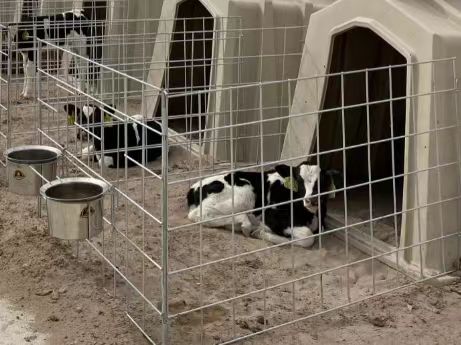
How Do You Choose a Calf Hutch That Supports Future Housing Plans?
When purchasing a calf hutch, consider not only how it will be used during the first weeks of life but also how it fits into the farm's longer-term calf management system.
Evaluate the hutch's usable space, ventilation, drainage requirements, cleaning access, durability, and suitability for the intended environment. If the farm plans to use hutches with attached outdoor pens or shared exercise areas, make sure the proposed arrangement provides sufficient space and safe movement.
Also consider how the hutches will be positioned. Access for feeding, observation, cleaning equipment, and manure removal can influence daily labor requirements.
For farms planning to transition calves into pair or group housing, the hutch area should connect logically with the next stage of the production system. Think about where calves will move, how feeding will be managed, and whether the available group pens can accommodate the expected number of animals.
Before ordering, confirm the product dimensions, materials, installation requirements, and available options with the supplier. A hutch that suits the farm's workflow can remain useful across many production cycles, even though each calf will eventually move to a different housing system. For more guidance on these factors, read our guide to [calf hutch design and selection].