How long can hog slats be used for pigs? There is no unified service life applicable to all pig barn. The service life of the hog floor depends on the material, manufacturing quality, pig weight, installation method, manure exposure, cleaning method and floor maintenance. Well-made and supported Concrete slats can be used for many years, while worn or damaged slats may need to be treated earlier.
For pig producers, the question is not just how many years the floor can be used in the barn. High-quality hog slats should continue to provide sufficient load-bearing capacity, drainage capacity, anti-slip performance and safe tread surface throughout the whole use cycle. When the slatted floor is seriously worn, cracked, rough or damaged, its condition may affect the welfare of pigs and the daily management of pig farms.
This article will introduce what factors will affect the service life of hog slats, how to judge that the pig house floor has worn out, and what factors should pig farmers consider when choosing pig floors for new or existing pig housing system.
What Are Hog Slats Used For?
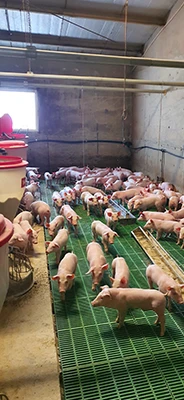
The hog slats is a slatted flooring components assembly installed in the pig pen, which is used to form a floor for pigs to move, while allowing manure and liquids to be discharged under the pigs through the cracks in the floor. Unlike the way that requires the staff to clean up all the manure directly from the ground of the pig pen, the slatted system allows waste to enter the sewage pit or collection area below through the gap.
This is also why slatted pig flooring is widely used in modern pig housing. The flooring can help keep the pig's activity area relatively dry and reduce the daily manual manure cleaning work. Pork Information Gateway pointed out that slatted floors can reduce manual labor associated with manure removal, while providing drainage channels for urine and spilled drinking water.
Different materials and designs can be used for hog slats. Due to its strong load-bearing capacity, concrete pig floors are more common in pig house with large bearing capacity; while plastic and other materials are also used in barns, nursery houses and other areas.
However, you can't just consider the strength when choosing a floor. The opening size, slat width, surface condition, support underneath, and suitability for the pigs being housed all matter. For example, the relevant guidelines of the British government emphasize that the pig floors should be suitable for the size and weight of pigs, and should not cause injury to pigs due to improper manufacturing or maintenance.
How Long Do Hog Slats Last?
hog slats can have a long service life, but their actual lifespan depends heavily on the material and operating conditions.
Therefore, instead of understanding the service life of the pig flooring as a fixed expiration time, it is better to regard it as a range.
The concrete slats is designed to withstand large loads. If it is properly manufactured, installed and maintained, it can be used for many years. But at the same time, research shows that in a harsh livestock and poultry environment, the deterioration of the floor may begin earlier than expected by many pig producers. A review of a study on floor quality pointed out that concrete slats may deteriorate within five years, including increased surface roughness and widening gaps.
This does not mean that every concrete slats must be replaced after five years. More precisely, five years can be an important point, during which the condition of the floor should be carefully assessed.
Manure, moisture, detergent, mechanical load and long-term repeated use will put pressure on the floor. If the floor still has good structural strength and the surface is still suitable for pigs, it may continue to be used. However, if there are cracks, edge damage, excessive wear or gap expansion, the floor may not continue to provide the original level of safety and usability.
Therefore, instead of asking: "How many years can the leaky seam floor for pigs be used?"
It's better to ask: "Are these hog slats still structurally intact, supported correctly, and suitable for the pigs currently using them?"
For commercial pig farms, this is a more practical maintenance problem.
What Determines the Lifespan of Hog Slats?
There are many factors that affect how long the pig slats of the pigsty can be used. Of course, the material is important, but it is only one of the factors.
Flooring Material
Concrete slats is widely used in occasions that require high load-bearing capacity. The concrete floor is heavy and strong in structure, but its surface may gradually deteriorate if it is exposed to moisture, manure, acidic substances and mechanical wear for a long time.
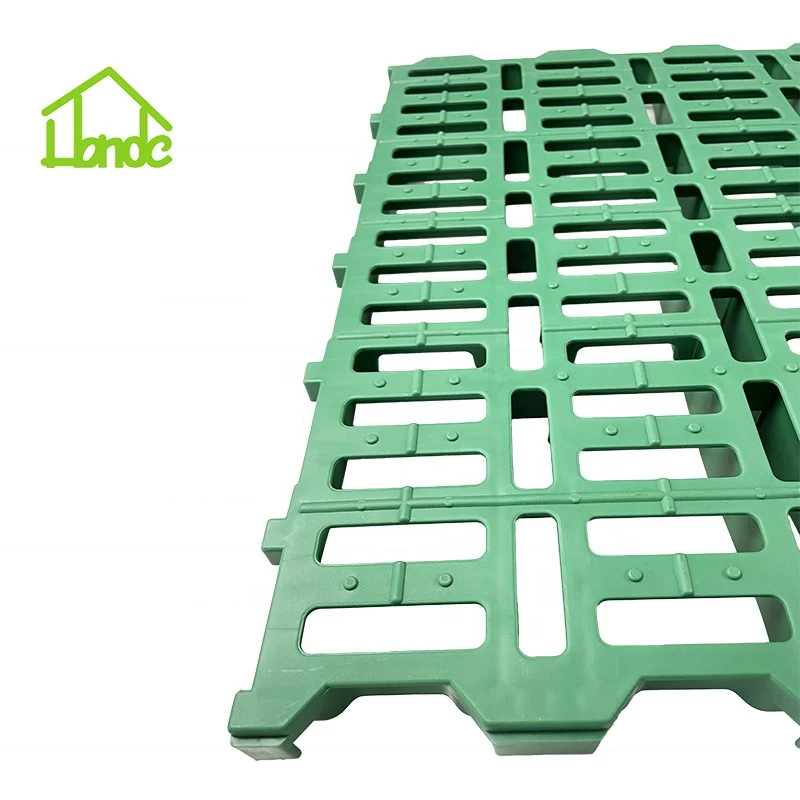
Plastic slats is usually used in some farrowing houses and nursery houses. They are lighter and can provide different ground environments for piglets, but their long-term performance depends on the specific plastic formula, structural design, support spacing and load.
Pork Information Gateway lists concrete, steel, plastic, fiberglass, cast iron, aluminum and other materials as materials that have been used to make slatted floors. At the same time, the agency also pointed out that insufficient support may shorten the service life of the floor and affect its performance.
Therefore, there is no universally applicable answer, such as "plastic must be used longer" or "concrete must be used longer". The correct comparison depends on the location of the floor and the type of pig that actually uses the floor.
Pig Weight and Loading
The load conditions of the nursing pig floor are different from the fattening pig floor.
As pigs continue to grow, their weight will increase significantly. A kind of floor suitable for piglets, which cannot be automatically considered equally suitable for fattening pigs or breeding pigs with a large weight.
This is especially important when choosing pig slats for a new pig house. The floor design should match the expected pig weight, support system, pig pen layout and production stage.
Installation and Support
Even high-quality floors may be damaged in advance if installed improperly.
The supporting structure must ensure the stability of the slats and prevent excessive movement or deformation. If the support spacing is incorrect, the load may be concentrated in areas that were not originally designed to bear these loads.
Therefore, the floor should be regarded as a complete system, not a bunch of separate parts. There is a mutual relationship between the pig house floor itself, the support structure, the manure pit, the size of the pig pen and the load of the pig.
Moisture, Manure, and Cleaning
The pig farm is an environment with high requirements for building materials.
The floor will repeatedly come into contact with urine, feces, moisture, moisture and the cleaning process. In particular, the concrete floor may be affected by the harsh environment inside the livestock and poultry house.
Cleaning is necessary for hygiene management, but the cleaning method and frequency should also be suitable for the floor materials. If the floor is repeatedly exposed to inappropriate environmental conditions for a long time without proper maintenance, it may deteriorate faster than the floor under better control conditions.
Surface Wear
Structural strength is not the only criterion to measure the service life of the floor.
A piece of floor may still exist in the physical structure, but if its walking surface becomes too rough, slippery, damaged or uneven, it may no longer be suitable for pigs.
The study on group sows emphasizes that the anti-slip performance, abrasiveness, surface shape, hardness, seam width and gap size of the floor will all affect the potential risk of pig injury caused by the floor.
This means that the floor may have reached the end of its actual service life before it is completely damaged.
How Do You Know When Hog Slats Need to Be Replaced?
Pigs should regularly check the hog slats for pigs, instead of waiting for a serious failure to deal with it.
It is necessary to pay attention to whether there are obvious cracks, edge damage, rebar exposure, severe surface wear, abnormal movement, gap expansion, or some areas that are no longer level with the adjacent floor.
The behavior of pigs can also provide useful information. If the pig is obviously unwilling to walk through a specific area, repeatedly slips, or has foot and leg problems, the floor should be checked instead of directly thinking that the problem has nothing to do with the floor.
The poor condition of the floor is not only a structural problem. Government guidance on the welfare of pigs points out that the floor should be reasonably designed and maintained to avoid injury or pain in pigs; worn or damaged ground may also cause problems with the hooves and legs of pigs.
A warning signal that deserves special attention is the change in the size or edge of the floor gap. As the seam plate continues to wear out, the gap may become larger and the edge may become rougher. Research shows that the deterioration of concrete floors is related to the expansion of the gap and the increase of surface roughness.
If the damage is concentrated in only a local area, depending on the specific floor system, sometimes only a single damaged part can be replaced. However, if the floor has deteriorated on a large scale, just repairing individual areas may only delay the time for larger-scale floor renovation.
conclusion
The service life of hog slats ultimately depends not only on the material itself.
Even a solid floor may not perform well if the support is not correct. A well-designed floor may deteriorate rapidly if it bears improper load or improper maintenance for a long time. On the contrary, if the floor system is reasonably selected and installed correctly, it can be used stably for many years.
For pig producers, it is better to continuously monitor the condition of the floor throughout the use cycle.
Check for cracks, rough surfaces, widening gaps, instability and other signs of deterioration. At the same time, pigs should also be observed, because changes in the walking behavior of pigs, slippage or changes in the condition of their feet and legs may indicate that the floor needs further inspection.
When choosing a new hog slats, you should focus on the whole system, including the weight, material, support method, gap design, drainage, cleaning, maintenance and the production stage of the pig.
This method is more reliable than choosing the floor simply because the product claims to have a fixed service life.
In a well-designed pig farm system, durable floors should not only be able to be used for many years, but also continue to provide safe, practical movement and walking surface for pigs in these years of use.
Choosing durable hog slats is an important part of building a practical pig housing system, but flooring is only one aspect of barn design. Feeding equipment, watering systems, ventilation, and pig handling equipment also influence daily farm management. To understand how these components work together, explore our guide to pig housing equipment.