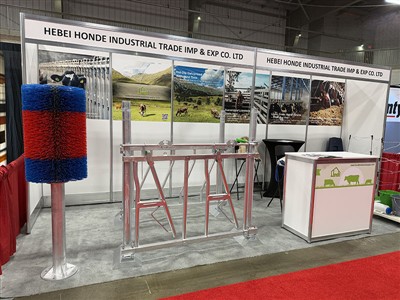
Calf pens are specialized feeding facilities designed for calves from birth to weaning. They promote healthy calf development and reduce the risk of disease transmission through physical isolation. In large-scale cattle farms, these facilities play a core role in isolation management, environmental control, and feeding support. They are characterized by cleanliness, dryness, and good ventilation. Outdoor calf islands typically consist of white box-type sheds and fences.
Based on usage environment, they are divided into indoor and outdoor pens: Indoor pens use wooden slatted floors and isolation designs to prevent licking, and are approximately 1.5 meters long and equipped with feeding devices; outdoor pens include movable structures such as calf islands, and are made of reinforced polyester fiberglass for wind and heat protection. According to feeding standards, calves need to be kept alone for 10-15 days after birth, gradually moving to outdoor pens after 7 days of age. They are kept in single-pen housing until weaning, for up to 67 days, with daily cleaning and weekly disinfection.
This facility originated from the needs of large-scale farming in the 20th century. In the 1980s, Japan first converted it into isolation pens for sick calves. With technological advancements, modern calf islands have evolved into modular designs, with adjustable sizes to accommodate different growth stages. Modern calf pens are often integrated with IoT technology to enable environmental monitoring and precise feeding, thereby improving feeding efficiency and survival rates. Studies have shown that in the colder northern seasons, calf islands outperform conventional calf barn rearing methods in terms of environmental indicators and calf growth performance.